NO BIO
1934
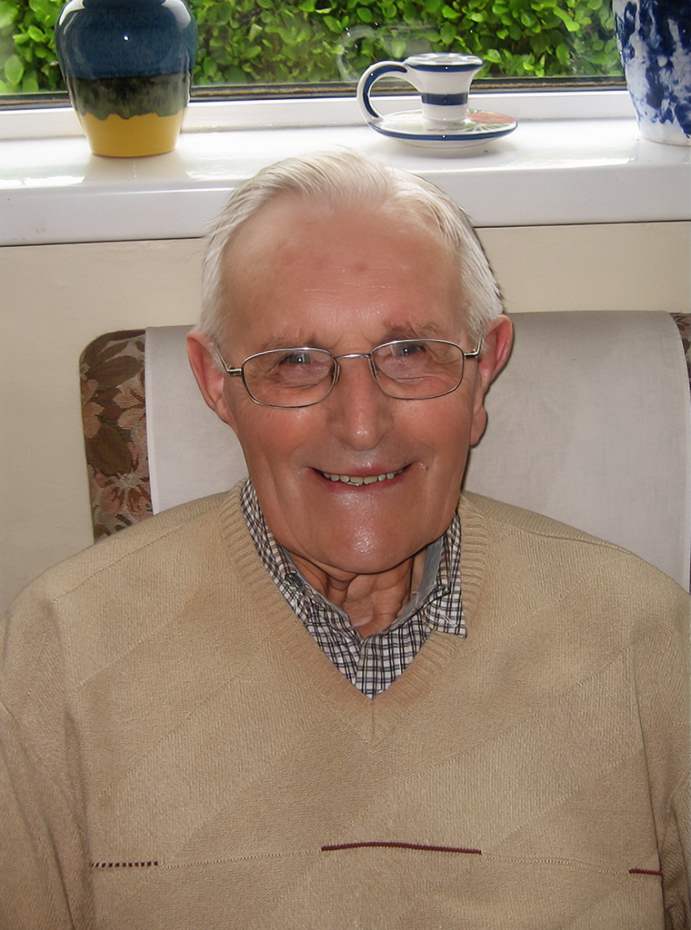
Master Sean O’Sullivan was interviewed on the 24th of March 2018 by Liz O’Dell
Interview: WCOH0015
The following topics are covered in Sean’s interview.
Life story, childhood, school, education, family, influences, social change, religion, rural life, agriculture, entertainment, emigration, traditions, folklore, folk belief, superstition, electricity, local characters, family history, historical events.
The Cliamhain Isteach WCOHAS_0014
Seán’s paternal grandmother was called Jude. Jude was one of a family of six girls and one boy. Seán notes the unusual thing about it is that the boy, (Seán assumes he was older than the girls), went as Cliamhain Isteach to another Townland not far away, whereas Jude herself brought in a Cliamhain Isteach from the other side of Seán’s parish.
NO TRANSCRIPT
Emigration to Montana WCOHAS_0015
Emigration was rife in Beara when Seán was growing up. People went to America. Most of the people from Eyeries parish emigrated to Butte, Montana. Some of the men had worked in the copper mines in Allihies, including Seán’s uncle, who was his namesake. Seán’s aunt also emigrated to Butte. Seán states that over 40 years, up to the year 1870, 1,138 people from Eyeries parish emigrated to Butte. Most of the people who worked in the copper mines in Butte came from Mayo, Donegal, and Cork. Seán believes the man who discovered the copper in Butte was from Cavan and he was called Marcus Daly. Six of Seán’s family emigrated to America and none of them ever returned. Seán talks about when some of Seán’s father’s family emigrated to America. As The Princess Beara went out to the harbour down by Bere Island it hooted the horn. The parents knew that they would never again see their families.
NO TRANSCRIPT
Teacher Training WCOHAS_0016
Seán recalls that eighty men were trained in St Patrick’s College every year. They were taught by the Vincentian Fathers religious order. The country boys all made sure they climbed Nelson’s Pillar. They had dances in the Teacher’s Club. They had to be in every night at eleven. It was a race to get back up to Drumcondra from Parnell Square. They wouldn’t have the money for the bus. The interviewer enquires about the girls. The training college called Carysfort, in Blackrock, Dublin, is where the girls were. They all met up at the Teacher’s Club.
NO TRANSCRIPT
Holy Year WCOHAS_0017
Seán’s first teaching practice was at (inaudible – sounds like ordnance) school in 1950. It was Holy Year in 1950, and teachers were the only people who could afford to go to Rome. Seán substituted for two teachers who went to Rome. One teacher came back, and Seán then substituted for the next teacher who went to Rome.
NO TRANSCRIPT
Do You Know Queenstown? WCOHAS_0018
Seán recalls being asked by people in Leitrim about Queenstown/Cobh because they were so familiar with driving their siblings down there to emigrate to America.
NO TRANSCRIPT
Teaching in Leitrim WCOHAS_0019
The following morning Seán headed out for his school. He didn’t know where he was going. Seán couldn’t use the bike that day as there was so much snow. Leitrim was always subject to snow drifts every winter. Every school up there would be closed for a fortnight at least, every month of January. Seán describes the school. There was a big room and a small room that was never used in the winter because the fire didn’t work there. Spent had to spend two years teaching to get his diploma. Seán had his mind made up that eventually, he would head back to West Cork.
NO TRANSCRIPT
Role of Parish Priest WCOHAS_0020
The interviewer asks about the regime in the 1950s as opposed to teachers now. Seán describes the process of applying for a teaching position: you saw the advertisement in the paper and you applied to the parish priest because all parish priests were managers of all the schools in their parish. It was up to the parish priest to decide whether he would accept you or not. The parish priest had full control over you.
The interviewer asks if the priest could decide to get rid of you. Seán states that they could. Seán thinks that it was in the 1920s when priests were barred by the statutes in Maynooth, and they had to go through the bishop to terminate a teacher’s employment. Seán notes again that the parish priest had full control, and “he had certainly great control of the lady teachers”; they were expected to take charge of the choir and they had to attend the Devotions and the Benediction on Sundays. Seán notes that a lot of how they appointed those teachers was by how they would cope with the music in the church. Seán states that some of the parish priests had no interest in education, but “they had the power”. Seán comments, “The new landlords in our country”.
NO TRANSCRIPT
Scared of the Inspectors WCOHAS_0021
The interviewer asks if inspectors were going around checking that the standard was maintained. Seán states that the teachers were scared of the inspectors, and that there was a gulf between them. Seán notes that the inspectors could be very strict, and that the regime wasn’t a child-centred one until the 1970s when the new curriculum came in.
The interviewer asks about Seán’s emphasis or approach to subjects:
“the three R’s were so important”, “your programme was laid down”, and it was monitored by the inspectors. Seán recalls that time was your enemy. In a two-teacher school, Seán had to teach, for example, English and Maths simultaneously and the English would suffer. Seán notes that the regime was tough, but that was the rule of the day and you just got on with it.
NO TRANSCRIPT
Highly Efficient Regime WCOHAS_0022
Seán describes the system in the generation before Seán’s. It was called the ‘efficient’ and the ‘highly efficient’ system. A grading from the inspector of highly efficient meant an increase in salary. Seán explains that teachers with big families of their own would aim for highly efficient. This meant that children were pushed and driven. Seán believes it was the child that suffered. Seán agrees with the interviewer’s comment that it was a cruel system. Seán notes that the system became child-centred with the introduction of the new curriculum in the 1970s.
NO TRANSCRIPT